Wolf Range Repair
Wolf Serial Number Lookup: Where to Find It and How to Date It
Wolf does not print an easy date code, so to learn the build year you copy the model and serial number off the rating plate and have Wolf customer care or a technician match the serial to its production record. Here is where that plate sits on each Wolf cooking product.
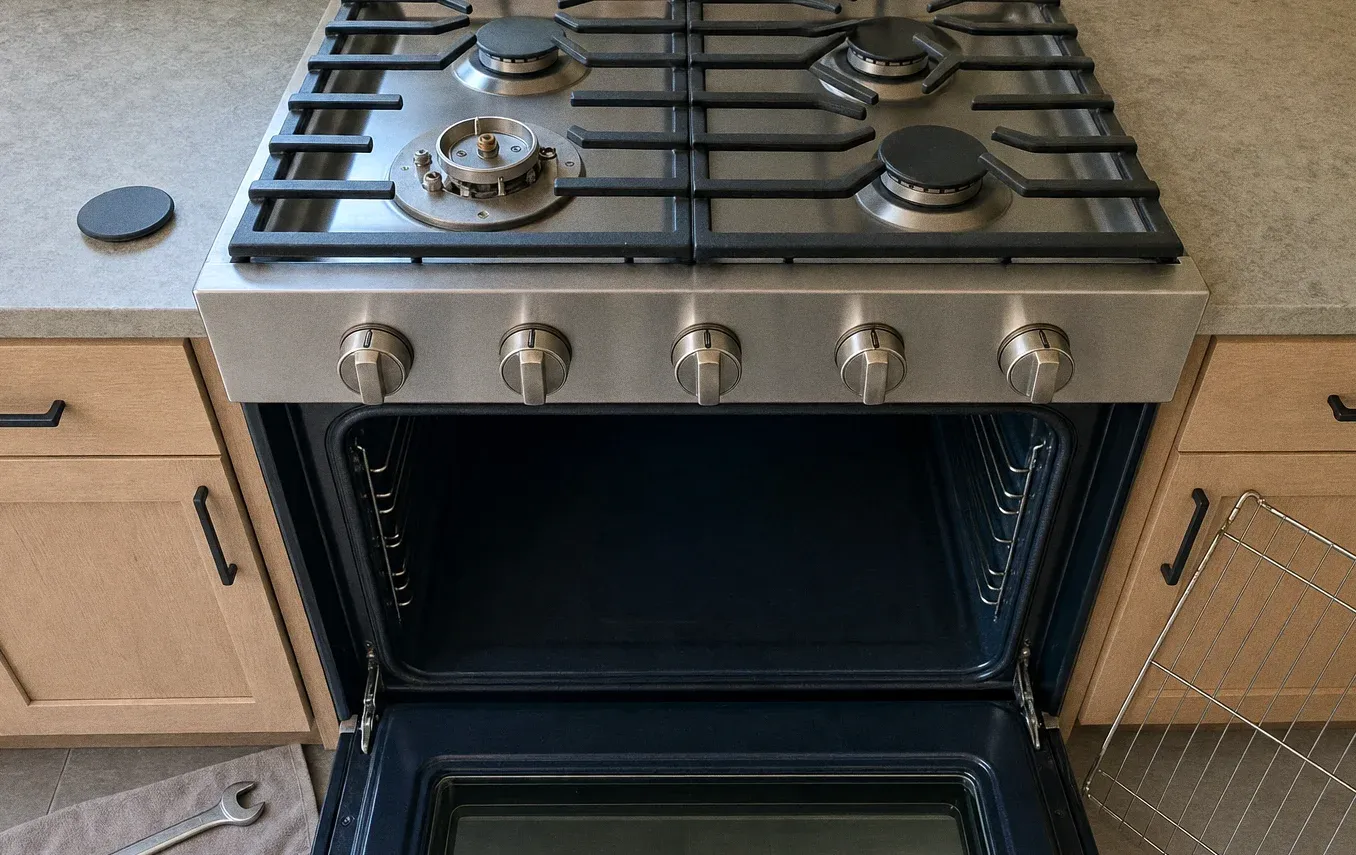
The quickest way to find out how old a Wolf appliance is takes two steps: copy the model and serial number from its rating plate, then have the serial checked against the manufacturer’s production records, either by calling Wolf customer care or by giving both numbers to the technician when you book. Wolf does not publish a chart for decoding serials, so guessing a year from the first few digits tends to go wrong. If the plate itself shows a date, that settles it. On a range, start by pulling off the kick plate at the base; on a wall oven, open the door all the way and look along the frame.
That small chore matters in Boston more than you might expect. Plenty of condo kitchens here have changed hands with the appliances staying put and the paperwork long gone, so the plate is often the only record of what the range in the corner actually is.
Where the rating plate sits on each Wolf product
Wolf fixes a small metal or foil label, called the rating plate or data plate, somewhere you can reach without tools on most products. Take a phone photo rather than copying it by hand. The characters are tiny, and a zero and the letter O, or a one and the letter I, are easy to confuse.
Ranges and rangetops
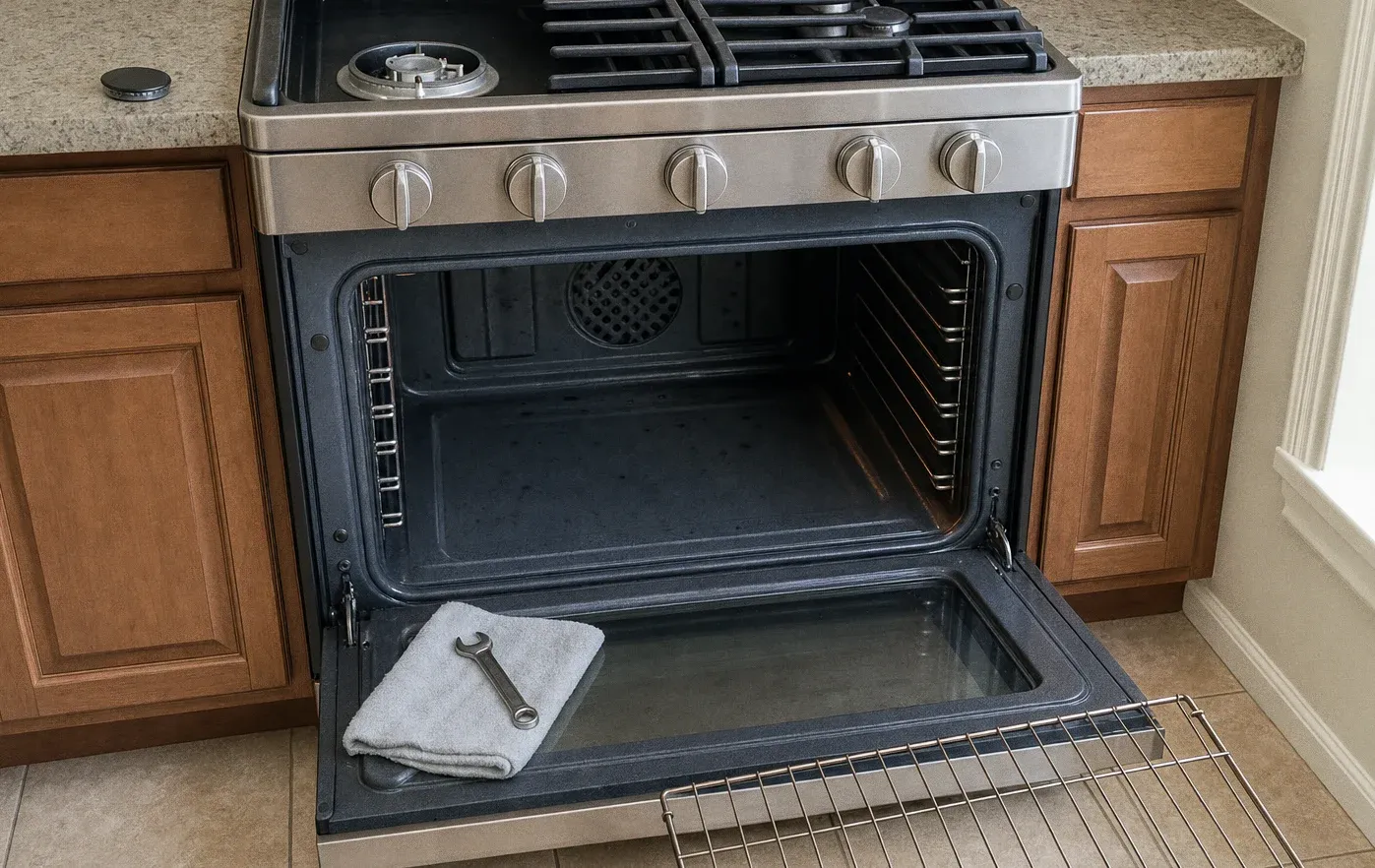
On gas and dual-fuel ranges, look behind the kick plate along the bottom front, which lifts or pulls away on most models, or on the frame beside the oven opening with the door lowered. A rangetop has no oven, so its label usually sits underneath or on the side of the chassis, and you may need a flashlight from the cabinet below.
Wall, steam and speed ovens
Open the door fully and check the side trim and the frame around the cavity. On a double oven, look around both openings before you assume the plate has gone missing.
Cooktops, hoods and warming drawers
A cooktop carries its plate on the underside of the burner box, so the view is from inside the cabinet beneath it. A hood hides the label behind the grease filters, on the inner liner or near the blower. A warming drawer shows it on the side of the drawer once you pull it out as far as it travels.
Reading the model number: type, width and series
The model number describes the appliance; the serial number identifies your particular unit. Wolf builds its model numbers from plain parts. Letters at the front name the product type, such as DF for a dual-fuel range, GR for an all-gas range, CT for a cooktop, and SO or DO for a single or double wall oven. The digits after that usually give the width in inches, and on ranges and rangetops a final digit often counts the burners. Letters at the end can mark the design style, the series generation or the fuel, and an LP ending points to a unit set up for propane instead of natural gas.
The series letters deserve attention. Wolf has redesigned its wall ovens and ranges more than once, and two ovens of the same width from different generations can share very few control parts. Saying you own a thirty-inch Wolf wall oven describes several quite different machines; the full model number narrows it to one.
What the serial number reveals, and how to get the year
The serial is the unit’s own identity. Matched against the manufacturer’s records, it gives the production date and the build revision, and registration records can also show when the appliance was installed. That installation date is the one any remaining coverage runs from, so if you are on the phone with Wolf, ask for both.
Write down the full string, letters included, and read it back once. Websites that promise to decode a Wolf serial in seconds are working from patterns, and a guess that is off by several years can send you to the wrong parts diagram or the wrong conclusion about whether the appliance is worth fixing.
While you are at the plate, note the gas type and the electrical rating as well. A dual-fuel range needs both a gas supply and a 240-volt circuit, and the rating tells a technician what the unit expects before anyone moves it.
Clues to age when the plate is missing or worn
Plates get scorched near oven vents, painted over during a renovation, or lost when a kick plate is swapped. If yours is unreadable, other evidence still narrows the age:
- an installation invoice, the original set of manuals or a registration card left in a kitchen drawer
- date codes printed on internal parts such as harness labels or the back of a control board, which a technician can read once panels are off
- the styling itself, since knob shape, control panel layout and a dial versus a touchscreen on a wall oven all point to a generation
- condo or building records for the kitchen renovation, which can date the room even when they never name the appliance
None of these is as exact as the serial, but together they usually land within a few years, and that is close enough for most repair decisions.
Why the technician asks for both numbers before the visit
Wolf has revised parts partway through production, so the correct igniter, valve or control board can depend on the serial range rather than on the model alone. With both numbers ahead of time, a technician can pull the right wiring diagram, check whether a service bulletin applies and load the parts most likely to be needed. That is often the difference between one visit and two, whether the job is Wolf range repair or a wall oven that will not hold temperature.
A visit from us costs $95 up front, which covers getting to your kitchen and working out exactly what failed; if you say yes to the repair, that sum is deducted from it. Read out the model and serial when you call (781) 604-1175, and if a burner is the complaint, our notes on the order to check a Wolf burner that will not light are worth a look first.
Age, cost and the repair-or-replace question
Knowing the year makes the repair conversation more honest. A Wolf range is built for a long working life, and a unit only a few years old with a failed igniter is a plain repair: igniter or spark module replacement typically runs $290–$680. A control board or touch panel is a bigger job, typically $510–$1,590, and on an older oven it is fair to ask whether that board is still made at all. Set those figures beside the cost of buying and fitting a comparable new pro range, which is many times higher. These are typical ranges, and the firm quote comes after diagnosis.
Age alone rarely decides it. A twenty-year-old range with a sound oven cavity and parts still available can keep cooking for years, while a newer one waiting on a discontinued board may not. The serial number is what lets someone check availability instead of guessing.
Still asked afterwards
Can I work out the year of a Wolf range from its serial number myself?
Not reliably, because Wolf does not publish a decoding chart for its serial numbers. Copy the full serial from the rating plate and ask Wolf customer care or your technician to look it up, and check the plate itself first in case it already shows a manufacture date.
Where is the serial number on a Wolf wall oven?
It is on the rating plate along the oven frame, which you can see once the door is fully open. Check both side trims and the top edge of the opening, and on a double oven look around both cavities before deciding the plate is gone.
What is the difference between a Wolf model number and a serial number?
The model number names the kind of appliance, its width and its series, while the serial number identifies your one unit. Parts can change within a single model, so a technician needs the pair rather than the model alone.
What if the rating plate is missing or scorched?
A technician can usually still estimate the age from component labels, the control layout and the design generation once the panels are open. An installation invoice, the original manuals or condo renovation records can narrow it further, often to within a few years.
Do I need the serial number before booking a Wolf repair?
It is not required, but it saves time. With the model and serial in hand before the visit, the technician can check the parts revision and any service bulletin and bring the likely parts, which can spare you a second trip. Read both out when you call (781) 604-1175.